

Herd Health Days at the Double R: Chute side with the Hair Sheep


"The Double R" is not just where we call home for now, but it is also home to over 100 hair sheep. If you aren't familiar with sheep there are "wool sheep," which are used for harvesting their fiber and meat, and there are "hair sheep" are used raised primarily for meat production. Our operation is made up entirely of Barbados Black Belly, St. Croix Sheep, and a cross between the two which we refer to as our "Rocky Roads" (more on that later). The herd that roams the land here at the Double R originated from Virginia State University's Small Ruminant Program. Both of these breeds are known for their low inputs and of course their ability to convert grazing all things green into a delicate taste with a low fat content and low cholesterol, which makes it a very healthy choice of meat.
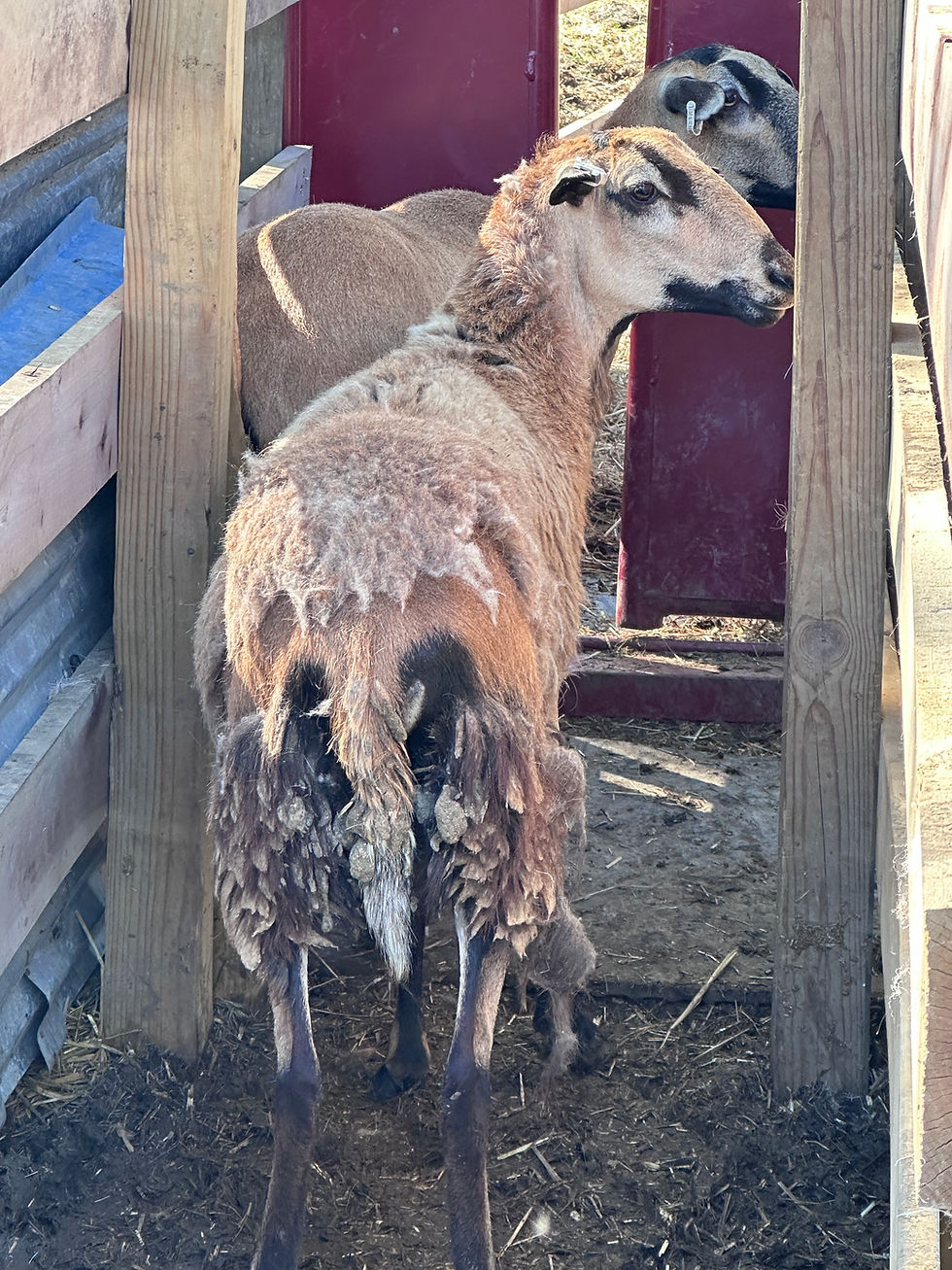
While both of these breeds originated from where their names suggests, St Croix and Barbados, which are known for their tropical climates; they have adapted to our cooler climate in Virginia which means when its really cold their hair will grow longer and thicker, and actually sheds when the weather begins to warm up, which is pretty convenient if you have a lot of them. However, many of these hair sheep in the flock that we manage did not shed out all the way yet, likely thanks to the drastic changes back and forth in temperatures which called for a little extra TLC. Cue the sheering in the hair sheep! Recently we had the pleasure of working with Ian, to shear Erin's Alpacas. Ian is the top shearer on the East Coast. He was very surprised to hear that as a beginning shearer that I was shearing hair sheep without difficulty, as they tend to be very hard to shear due to their coarse hair.

The hair removed during the shearing of our hair sheep holds no value and is primarily used by our operation for composting. However, shearing helps keep the animals cooler and cleaner. Many sheep had significant matting in longer areas due to the spring winds and the beginnings of fecal matter and mud build up.
The Double R's current herd health protocol was adapted from FACT'S Humane Farming Standards, which is a globally recognized framework for defining humane standards to ensure that livestock recieve comprehensive and compassionate care from birth to slaughter. We complete their free webinar classes regularly to stay up on best practices! (like us on our socials to see what education we are involved in next!) Of course we also work very closely with our vet to care appropriately for all of the animals.
We only administer antibiotics for treatment of disease or illness. While we monitor all of the animals daily, some things we just gotta get our hands on them for. Every few months, we run everyone through our working system to determine the health status, trim hooves, and this spring we needed to remove the hair/wool of the animals that were not shedding on their own. We take Famachas on the sheep to determine if deworming is necessary and follow the chart on www.acsrpc.org to medicate only if indicated. If we determine they need wormer we make sure its a different one each time, so that they do not develop a tolerance to the medication. For all of our new lambs and kids we give BoSE dose (per our vet) due to how selenium deficient our soils are in this part of our state. Hair sheep get to keep their tails, so no need to dock them! We also administer their CD&T while they are in their lambing jug with the ewes before we release them. We wether the rams that wont be retained or sold as breeding stock. More on this in another post! We give a one time dose of Covexin8/ Clostridial 8-way once to all sheep.

While there are many advantages to hair sheep, one of the biggest challenges our herd has faced is with their hooves. All of the sheep require regular hoof trimming and assessment, fortunately a few of the days we had a designated record keeper which allowed for us to make notes of which ewes and rams had the best feet in order to retain only the most superior genetics moving forward. Of course, we are always making notes and improvements not only for the animals health but also in efficiency with the facility in order to be most cost effective and have a stress free experience for not just us but the animal as well.


Comments